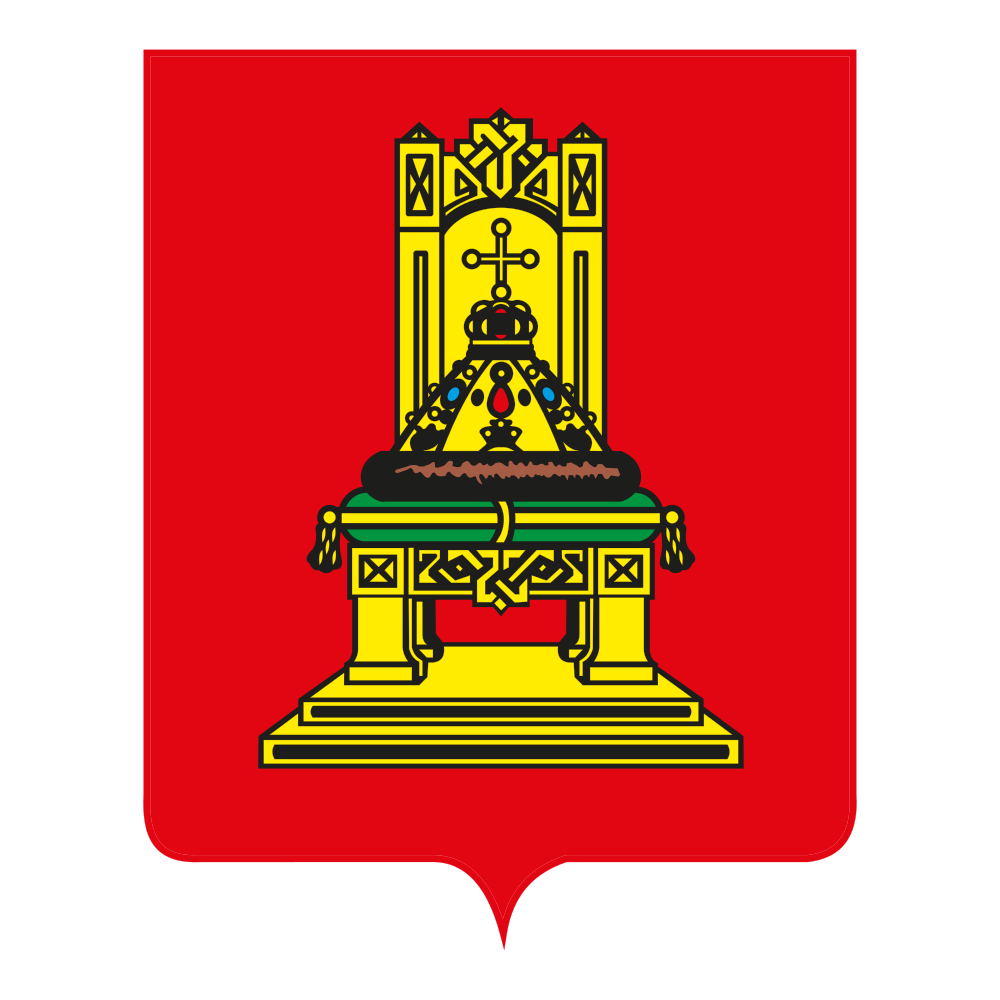
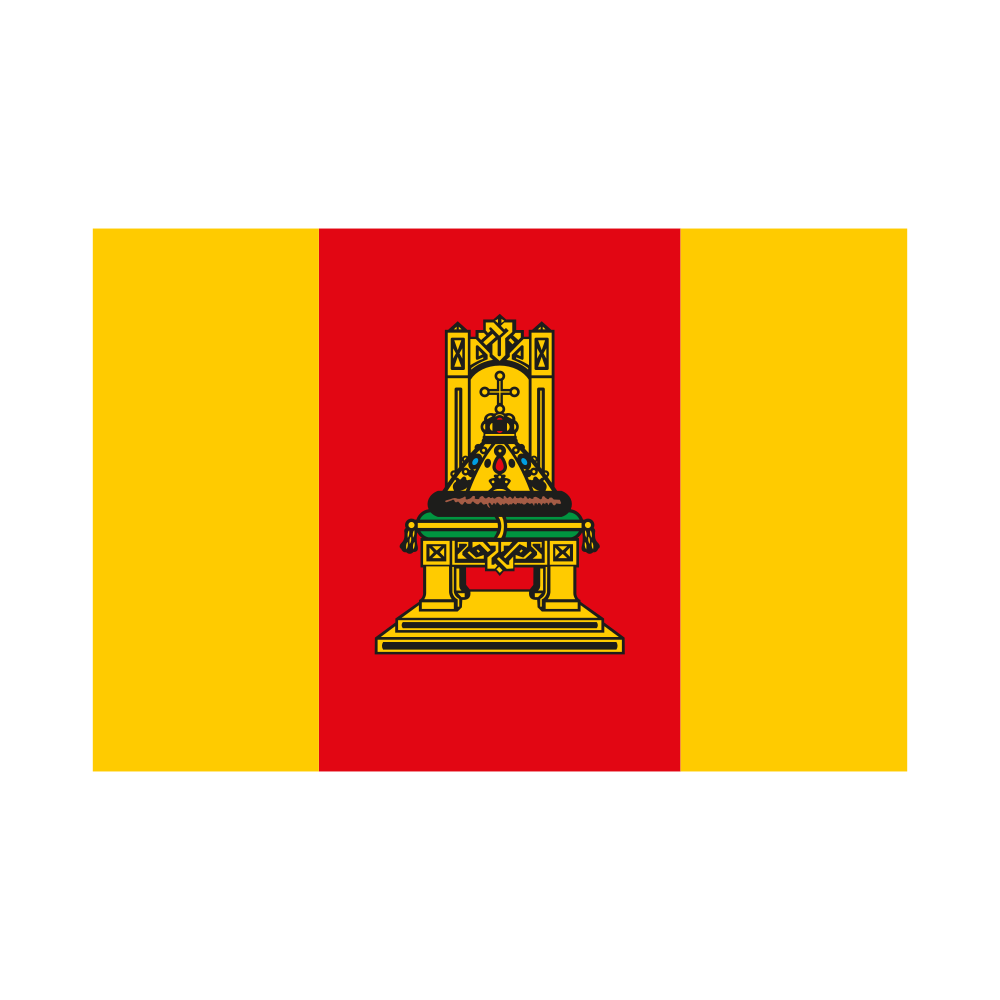
Regional flags and emblems
PROFILE
Established 29 January 1935
Capital Tver
The Tver Region is part of the Central Federal District
Area 84,200 sq m
Population 1 190 600 (2026)
Ethnic groups
(2020 National Census, %)
Russian – 94,16
Other – 5,84
Administrative divisions (2026)
Municipal districts – 36
City districts – 4
Geography and climate
The Tver Region lies in the northwest of Russia, extending 350 km from north to south and 450 kilometers east to west.
It borders on the Pskov, Novgorod, Vologda, Yaroslavl, Moscow and Smolensk regions.
There are nearly 1,000 rivers in the region, as well as over 500 lakes, including Seliger, Sterzh, Vselug, Peno and Volga, and nine major reservoirs, including Ivankovo, Uglich, Rybinsk and Vyshnevolotsk. The main rivers are the Volga, Tvertsa, Western Dvina and Mologa.
The climate is temperate continental. The January temperatures average −11.6°C, July temperatures average +19.8°C. Average precipitation in January is 61 mm; average precipitation in July is 117 mm. Winters are warmer and precipitation is more intense in the west of the region.
There are many protected nature areas in the Tver Region. The best known are the Central Forest Biosphere Reserve and the Zavidovo State Complex, of which only part extends into the Tver Region.
Government
The legislative branch is represented by the Legislative Assembly of the Tver Region, which is the permanent, representative and only body of legislative authority in the region.
It consists of 40 deputies, 20 of whom are elected under the majoritarian electoral system, and 20 in the region‑wide electoral district in proportion to the number of votes cast for lists of candidates for deputy nominated by electoral associations. The current Legislative Assembly of the region was elected in September 2021 for a five‑year term.
The system of executive bodies of the Tver Region includes the Governor of the Tver Region, the Government of the Tver Region, region‑level executive bodies, territorial executive bodies, and representative offices of the Government of the Tver Region. The Government of the Tver Region is the supreme permanently functioning executive body of Tver Region, formed by the Governor of the region.
The Governor of the Tver Region is the region’s highest-ranking official elected for five years by Russian citizens who permanently reside in the region. The Governor is the head of the regional government and manages its work. The term of office of the acting Governor of the Tver Region expires upon the assumption of office by the person elected as Governor of the region.
Economy and natural resources
The Tver Region’s economy is based on the industrial, construction and energy sectors, as well as wholesale and retail trade and the transport and communications sectors.
The emphasis on industry is an important factor in the economic development of the region. Industrial output accounts for over 30% of the regional GDP. The major industries include machine building, the food, pulp and paper, chemical and power industries, employing a quarter of the region’s workforce. Some of the region-based plants are of national importance.
The majority of Tver enterprises address high‑technology challenges. The foundation of the industrial complex is formed by OJSC ”Tver Carriage‑Building Plant“, OJSC ”Tsentrosvarmash“, CJSC ”Tver Experimental‑Mechanical Plant“, CJSC ”Tver Excavator“, OJSC ”Tverenergokabel“, LLC ”Savelovsky Machine‑Building Plant“, JSC ”Spetstechnika“, JSC ”MARS Plant“, JSC ”Luch Plant“, JSC ”MICROPRIBOR PLANT“, the Branch of FSUE ”SPC of Automation and Instrument‑Making named after Academician N.A. Pilyugin“ – ”Zvezda“ Plant, JSC ”514th Aircraft Repair Plant“, LLC ”Kalyazinsky Mechanical Plant“, and others.
The agricultural sector brings together agricultural enterprises with different forms of ownership, as well as farms specializing in crop production and livestock breeding. The sector mainly focuses on livestock breeding, raising meat and dairy cattle, sheep, pigs, goats and poultry. Crop production is focused on growing flax, potato, vegetables and fodder crops. The region is the country’s major flax growing area. The region has a unique enterprise, SNAIP, which produces kumis, fermented mare’s milk.
Small and medium‑sized enterprises make a significant contribution to the development of the economy of the Tver Region. The region is home to approximately 50 thousand small and medium‑sized enterprises, of which more than half are individual entrepreneurs.
To develop the manufacturing sector, the region has focused on the creation of industrial sites and industrial parks that will primarily accommodate new manufacturing facilities. Today, there are six industrial parks and about a dozen investment sites in the region.
Culture and tourism
The Tver Region has a unique cultural identity and has made an invaluable contribution to the Russian culture. It ranks high among the regions with the richest cultural heritage.
Cultural heritage sites include unique world-famous landmarks, such as the Nilov Monastery on Island Stolobny in the Ostashkovo District; the Assumption Monastery in the city of Staritsa; the Znamenskoye-Rayok mansion in the Torzhok District; the Bernovo History and Nature Reserve, which has many associations with the life and work of Alexander Pushkin; and the wooden Church of St John the Baptist in the village of Shirokovo, Penovsky District. The oldest cities in the region, Torzhok, Toropets, Bezhetsk and Tver, were founded over eight centuries ago.
Since time immemorial cities in the Tver Region have been national centers of decorative needlework, gold thread work, lace-making and tile decoration.
The rich historical and cultural heritage of the region makes it an attractive tourist destination. Visitors can take advantage of fascinating and informative itineraries that increase public awareness of local culture. Today, efforts are being made to bring a new lease on life to the world-famous Pushkin Ring Along the Upper Volga Area project, which includes Tver, Torzhok and the Torzhok and Staritsa districts, the places closely associated with the life and work of Alexander Pushkin.
Every year, the Tver Region hosts many major international, national and regional events, such as the Bach International Festival, the Singing Letters Slavonic Poetry International Festival and the Musorgsky Russian Opera Festival, I see a wonderful Land Music Festival and so on.